Introduction
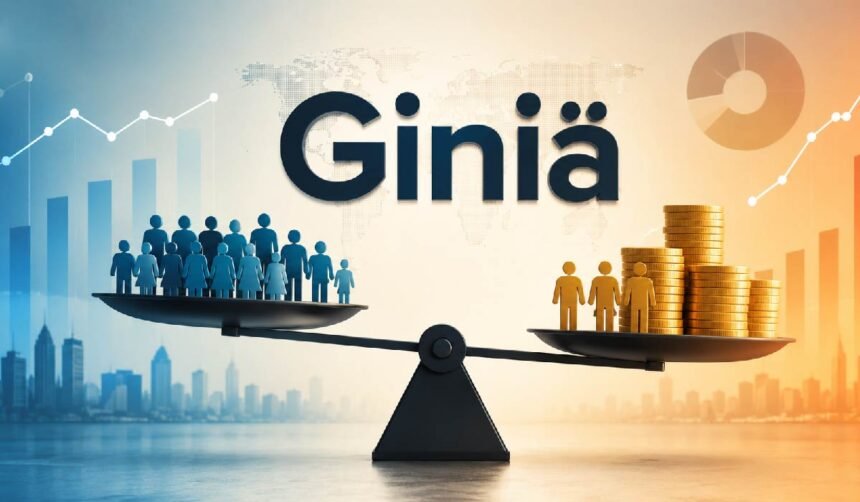
Giniä is a term most commonly used to describe the Gini coefficient, a statistical measure of income or wealth inequality developed by Corrado Gini. In simple terms, it shows how evenly or unevenly money is distributed among people in a society. At the same time, the word “giniä” also appears in language contexts, especially in Finnish, where it has a completely different meaning.
People are searching for Giniä more often today because discussions about inequality are growing worldwide, and unique terms like this attract attention online. It is important to understand that Giniä does not have a single fixed meaning. Its meaning depends on context. In economics, it is a key measurement tool. In language, it is a grammatical form. This article explains both sides in a clear and simple way so you can fully understand what Giniä means and why it matters today.
Giniä Meaning and Definition
Giniä is a context-based term that can have more than one meaning depending on how it is used. In economics, it refers to the Gini coefficient, which measures inequality in income or wealth. In language, especially Finnish, it is a grammatical form of the word “gini,” meaning gin, the beverage. Some people also confuse it with names or places, but those meanings are not correct in most cases.
Giniä is mainly known as a measurement of inequality that shows how fairly or unfairly income or wealth is distributed among people in a society. At the same time, it can appear in language contexts where it has no connection to economics, making it a flexible but often misunderstood term.
Understanding this dual meaning is important because it helps avoid confusion and allows you to interpret the word correctly in different situations.
Origin of Giniä – Historical and Linguistic Background
The economic meaning of Giniä comes from the work of Corrado Gini, who introduced the Gini coefficient in 1912. His research focused on measuring inequality in a simple but effective way. Over time, his method became one of the most widely used tools in economics and social science. Today, governments, researchers, and global organizations rely on it to understand income distribution.
On the linguistic side, Giniä comes from Finnish grammar. It is the partitive form of the word “gini,” which refers to gin, an alcoholic drink. The use of “ä” is part of Finnish language rules and does not change the core meaning of the word. This linguistic origin is completely separate from the statistical meaning.
It is important to clarify that Giniä has no real connection to mythology or ancient folklore in its true academic use. While some online sources try to link it to mystical ideas, these claims are not accurate. The real origins are scientific and linguistic, not symbolic or mythical.
Giniä as the Gini Coefficient (Core Concept)
The Gini coefficient is the main and most important meaning of Giniä. It is a number that shows how income or wealth is distributed across a population. Instead of looking at individual earnings, it summarizes the entire distribution into one simple value. This makes it easy to compare inequality between different countries or regions.
The concept is based on the idea of equality versus inequality. In a perfectly equal society, everyone earns the same amount of money. In a highly unequal society, a small group controls most of the wealth while others have very little. The Gini coefficient helps measure where a society stands between these two extremes.
This measurement is important because it provides a clear and simple way to understand complex economic conditions. Even people without a background in economics can use Giniä to get a general idea of how fair or unfair a system is.
Giniä Scale and Interpretation
The Gini coefficient is measured on a scale from 0 to 1. A value of 0 represents perfect equality, meaning everyone has the same income or wealth. A value of 1 represents perfect inequality, where one person has everything, and everyone else has nothing. In many reports, this scale is converted into a percentage from 0 to 100 for easier understanding.
In real life, no country has a value of exactly 0 or 1. Most countries fall somewhere in the middle. A lower Giniä value means income is more evenly distributed, while a higher value means there is a larger gap between rich and poor.
For example, a country with a moderate Gini value may have a strong middle class, while a country with a high value may show clear differences between wealthy elites and lower-income groups. This makes Giniä a useful tool for understanding social and economic balance.
How Giniä Is Calculated
Giniä is calculated using something called the Lorenz curve. This curve shows how income is distributed across a population. On one side, you have the percentage of people, and on the other, the percentage of total income they earn. If everyone earned the same, the curve would form a straight diagonal line.
In reality, the curve bends away from this line because income is not evenly distributed. The more it bends, the greater the inequality. The Gini coefficient measures the gap between the actual curve and the perfect equality line.
Although the calculation can involve advanced mathematics, the idea behind it is simple. It measures how far reality is from perfect fairness. Economists around the world use this method because it provides a clear and consistent way to measure inequality.
Why Giniä Matters in the Modern World
Giniä matters because inequality is one of the biggest challenges in today’s world. As economies grow, the benefits are not always shared equally. Some people gain more than others, leading to gaps in income and wealth. The Gini coefficient helps highlight these differences.
Understanding inequality is important for creating fair systems. When inequality becomes too high, it can lead to social and economic problems. By tracking Giniä, governments and organizations can identify trends and take action when needed.
In a globalized world, where economies are closely connected, measuring inequality is more important than ever. Giniä provides a simple way to understand a complex issue that affects millions of people.
Giniä in Government Policy and Decision-Making
Governments use Giniä to design and evaluate policies. When the Gini coefficient rises, it may signal that wealth is becoming more concentrated. This can lead to policy changes aimed at improving fairness. For example, governments may introduce progressive taxes, increase minimum wages, or expand social welfare programs.
Giniä also helps policymakers measure the impact of their decisions. If a new policy reduces inequality, the Gini value may decrease over time. If inequality increases, it may show that the policy needs adjustment.
This makes Giniä an important tool for decision-making. It provides evidence that helps governments create policies that support balanced economic growth and social stability.
Giniä and Social Impact (Society and Stability)
Inequality affects more than just income. It also influences social conditions such as education, healthcare, and overall quality of life. High Giniä values are often linked to social challenges like limited access to education, unequal healthcare systems, and higher crime rates.
When inequality is too high, people may feel excluded or disconnected from society. This can reduce trust in institutions and create tension between different groups. On the other hand, more balanced societies tend to experience greater stability and cooperation.
Giniä helps highlight these issues by showing the level of inequality. It allows researchers and policymakers to understand how economic differences affect social outcomes.
Global Comparison Using Giniä
One of the strengths of Giniä is that it allows comparisons between countries. Because it uses a standard scale, it can be applied to any population. This makes it useful for studying global trends and differences.
Developed countries often have lower Gini values compared to developing nations, but this is not always the case. Some wealthy countries still experience high inequality, while some developing countries have more balanced income distribution.
International organizations use Giniä to analyze economic performance and social development. It helps identify which countries are making progress and which ones face greater challenges.
Limitations of Giniä
Although Giniä is a powerful tool, it has limitations. It does not show actual income levels, which means two countries with the same Gini value can have very different living standards. One country may be wealthy overall, while another may have widespread poverty.
It also does not show where inequality exists within a society. It cannot tell whether the gap is between the rich and the middle class or between the middle class and the poor. This makes it less detailed than some other measures.
Because of these limitations, Giniä should not be used alone. It provides a general overview, but a complete understanding of inequality requires additional data.
Other Measures Used Alongside Giniä
To get a full picture of inequality, economists use other measures along with Giniä. These include poverty rates, which show how many people live below a certain income level, and median income, which represents the middle point of earnings in a population.
Wealth distribution is another important measure. It looks at how assets like property and investments are shared among people. These indicators provide more detail and help explain the patterns that Giniä alone cannot show.
By combining these tools, researchers can better understand economic conditions and create more effective policies.
Linguistic Meaning of Giniä
In Finnish, Giniä has a completely different meaning. It is the partitive form of the word “gini,” which refers to gin. The use of “ä” follows Finnish grammar rules and does not relate to economics in any way.
This linguistic meaning is important because it explains why the word may appear in unrelated contexts. Without this understanding, it can be easy to confuse the term with the Gini coefficient.
Recognizing this difference helps ensure accurate interpretation, especially when reading content from different languages.
Common Confusions About Giniä
Many people confuse Giniä with similar-sounding words. One common mistake is linking it to the name Gina, which is a personal name and has no connection to inequality. Another confusion is with Guinea, a country in West Africa, which is also unrelated.
These misunderstandings happen because the word looks and sounds similar to other terms. However, its main meaning in academic and economic contexts remains clear.
Understanding these differences is important for accurate learning and better search results.
Giniä in Media and Public Discussions
Giniä is often mentioned in news reports about economic inequality. Journalists use it to explain changes in income distribution and to highlight social issues. It is especially common during discussions about financial crises, housing affordability, and wage gaps.
As public awareness of inequality grows, Giniä has become a familiar term in media and policy debates. It helps simplify complex data and makes it easier for people to understand economic trends.
This increased visibility has made Giniä an important part of public conversations around fairness and opportunity.
Future Importance of Giniä in a Changing World
The importance of Giniä is expected to grow in the future. As technology, automation, and globalization reshape economies, new forms of inequality may emerge. Measuring these changes will require reliable tools like the Gini coefficient.
In the digital age, data collection is improving, which may lead to more accurate measurements. This will help policymakers respond more effectively to economic challenges.
Giniä will continue to play a key role in understanding how wealth and income are distributed, making it essential for future economic planning.
Conclusion
Giniä is more than just a technical term. It is a powerful way to understand inequality and how it affects society. Its main meaning as the Gini coefficient provides valuable insight into income distribution, while its linguistic meaning highlights the importance of context.
By understanding Giniä, we gain a clearer view of economic fairness and social balance. It helps governments, researchers, and individuals make informed decisions.
In a world where inequality continues to shape lives, Giniä remains a simple but essential tool for understanding and improving society.
FAQs About Giniä
What is Giniä in simple words?
Giniä is a measure of how equally money is shared in a society. A low value means income is more equal, while a high value shows a bigger gap between rich and poor people.
Why do people search for Giniä on Google?
People search for Giniä to understand income inequality, economic fairness, and global wealth gaps. It is also trending because many students, researchers, and readers want simple explanations of economic terms.
Who mostly searches for Giniä online?
Students, economists, researchers, and people interested in social issues search for Giniä the most. It is also popular among readers learning about income inequality and global economic trends.
Is Giniä the same as the Gini coefficient?
Yes, in most cases, Giniä refers to the Gini coefficient. It is a statistical number used to measure inequality in income or wealth distribution within a country or population.
Why is Giniä important today?
Giniä is important because it helps people understand how fair or unfair an economy is. Governments and organizations use it to study inequality and create policies that improve living conditions.
For More Information Visit Theexpertmagazine